
By Massive IT · March 1, 2024
Download Case Study PDF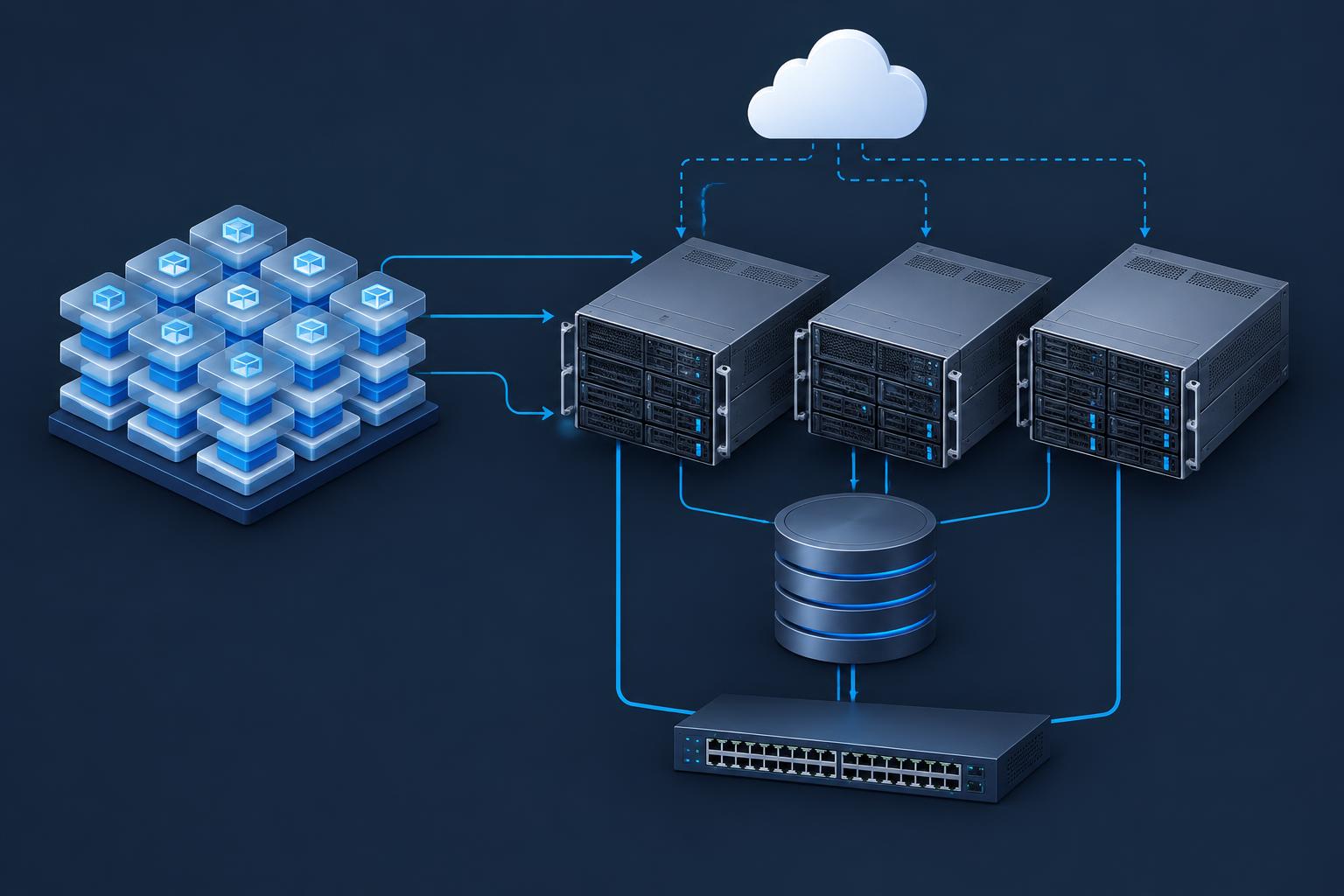
Project snapshot
| Detail | Documented scope |
|---|---|
| Customer | An organization consolidating on-premises servers; customer anonymized |
| Project date | March 2024 |
| Starting platform | Existing VMware ESXi hosts described in the proposal as obsolete |
| Proposed destination | A Dell-based Azure Stack HCI cluster running Hyper-V virtual machines |
| Delivery approach | Onsite hardware installation and initial configuration, followed by remote workload migration |
| Documented status | Quote and statement of work; implementation and customer acceptance are not verified |
This project case study is based on the supplied server consolidation proposal and statement of work. It describes planned scope, not a verified completion report. Customer identities, contact details, quote references, pricing, and identifying workload counts have been omitted.
Executive summary
The customer’s existing VMware environment was the starting point for a proposed server consolidation engagement. Massive IT’s statement of work outlined a Dell-based Azure Stack HCI cluster and migration of existing VMware virtual machines to Hyper-V on the new infrastructure.
The delivery plan separated physical installation from logical cluster configuration and remote migration. Its acceptance criteria focused on installed and configured hardware, an operational cluster, and migrated workloads operating on the new platform. The supplied document does not establish that those criteria were achieved.
Azure Stack HCI is the historical product name used in the March 2024 proposal. The discussion below reflects that proposal rather than prescribing today’s platform version or support configuration.
The challenge: change the platform, preserve workload operation
Replacing aging hypervisor hosts is more than a hardware purchase. Physical readiness, network configuration, storage design, migration tooling, and application operation all affect the transition.
The proposal’s planning uncertainty included the absence of a completed site survey. Customer access and infrastructure readiness could affect scope and schedule, and the start and end dates in the SOW remained placeholders.
The proposed platform
| Area | Documented proposal | Validation boundary |
|---|---|---|
| Compute | Dell servers configured as an Azure Stack HCI cluster | Final server model and bill of materials required reconciliation |
| Storage | Storage Spaces Direct configuration | Storage layout and controller configuration required platform compatibility review |
| Networking | Switching and host network configuration for cluster communication | Final topology, path resilience, and site requirements were not established |
| Virtualization | VMware virtual machines migrated to Hyper-V on Azure Stack HCI | Tool selection, guest compatibility, and workload validation required confirmation |
| Management | Hardware remote-management and Windows Admin Center integration items in the quote | Quoted capabilities do not prove deployed configuration or operational adoption |
The hardware listing and SOW reference different Dell server families. This case study therefore describes the intended Dell-based architecture without asserting a final purchased or deployed model. Likewise, installation language about RAID is not treated as a validated Storage Spaces Direct storage design.
Massive IT’s planned delivery
1. Onsite installation and preparation
Rack and cable the servers, complete initial power-up, and configure host settings, networking, and Azure Stack HCI installation. Customer data-center access and readiness were explicit dependencies.
2. Configure the cluster
Establish the cluster, configure Storage Spaces Direct, and check network functionality and inter-node communication. These were intended implementation tasks; the document contains no completed cluster validation or failover test evidence.
3. Migrate VMware workloads
Use appropriate migration tools to move the in-scope VMware virtual machines to Hyper-V on the new cluster. The SOW called for maintaining data integrity and having migrated workloads operate on the destination platform. It does not identify a confirmed tool, actual migration sequence, or achieved downtime.
4. Validate against the SOW
Acceptance was defined by installed and configured servers, an operational Azure Stack HCI cluster, and successfully migrated, operational virtual machines. The quote also included a support-hours block, which is not evidence of a defined ongoing managed-service outcome.
Planned acceptance and readiness checks
| Checkpoint | What the proposal required |
|---|---|
| Hardware readiness | Servers installed and configured onsite |
| Cluster readiness | An operational Azure Stack HCI cluster with functional storage and network communication |
| Workload migration | In-scope VMware virtual machines migrated and operational on the new cluster |
| Customer dependencies | Data-center and remote access, with infrastructure ready for the planned work |
| Change control | Communicate adjustments in scope or timing as implementation requirements become clear |
These checkpoints were contractual targets, not reported test results. A production implementation would still need an agreed workload-validation plan, recovery arrangements, and change windows; those details are not established by the supplied proposal.
Project status and takeaway
The source establishes a proposed VMware-to-Azure Stack HCI consolidation engagement. It does not verify customer approval, hardware delivery, completed migration, decommissioning of legacy hosts, performance gains, reduced costs, or uptime improvements.
The practical lesson is to keep procurement, platform design, onsite readiness, workload migration, and acceptance aligned. A clear SOW can frame the intended transition, but a proposal alone should never be presented as proof of a completed result.